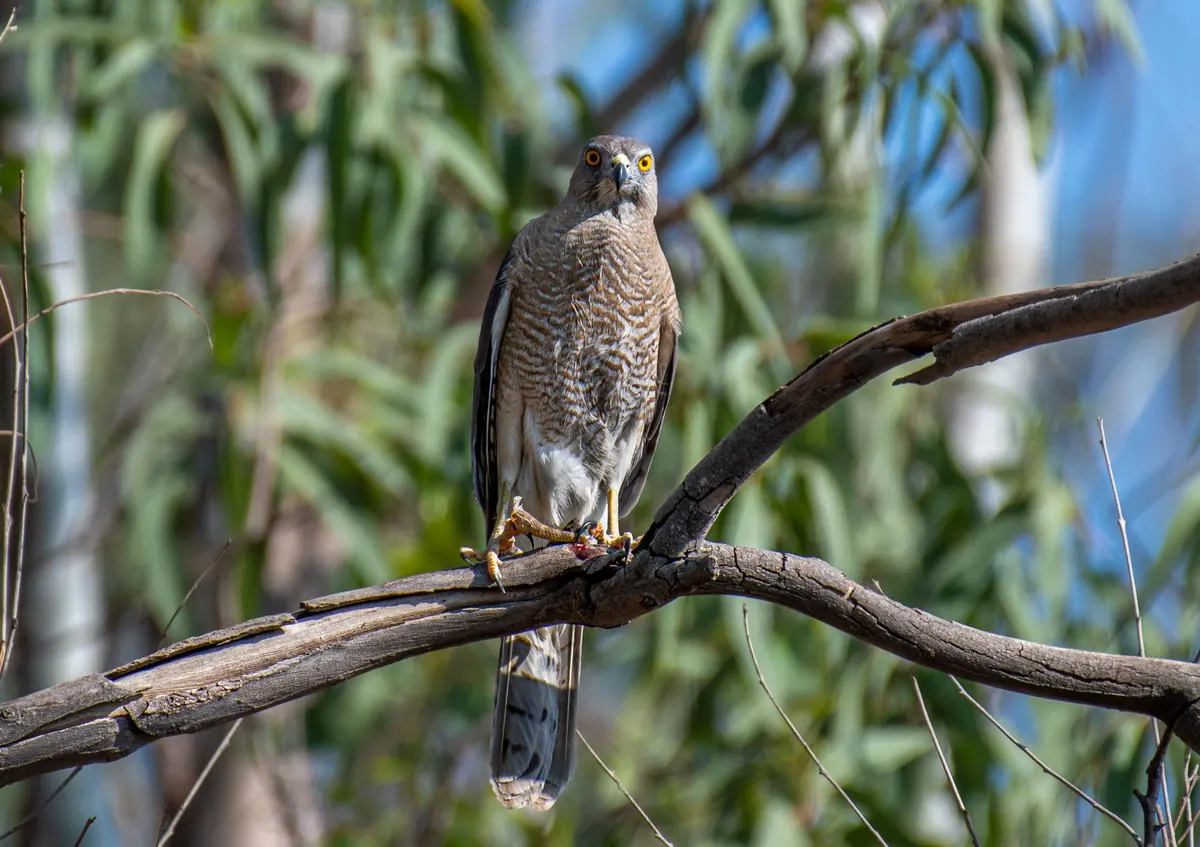
Few British birds reward patience like a woodland hawk. A goshawk crosses a gap in the canopy for four seconds and is gone. A sparrowhawk slips along a hedge line so low and fast that you feel it before you see it. Neither is truly rare, but both are experts at not being seen. The encouraging part is that they work to a pattern. Learn the pattern — the season, the weather, the shape of the wood, the way each species flies — and your chances rise sharply.
Two Hawks, One Wood
Sparrowhawks and goshawks are close relatives, and the classic identification trap is a male goshawk against a female sparrowhawk. Size alone will not settle it at distance, so look at build and flight instead.
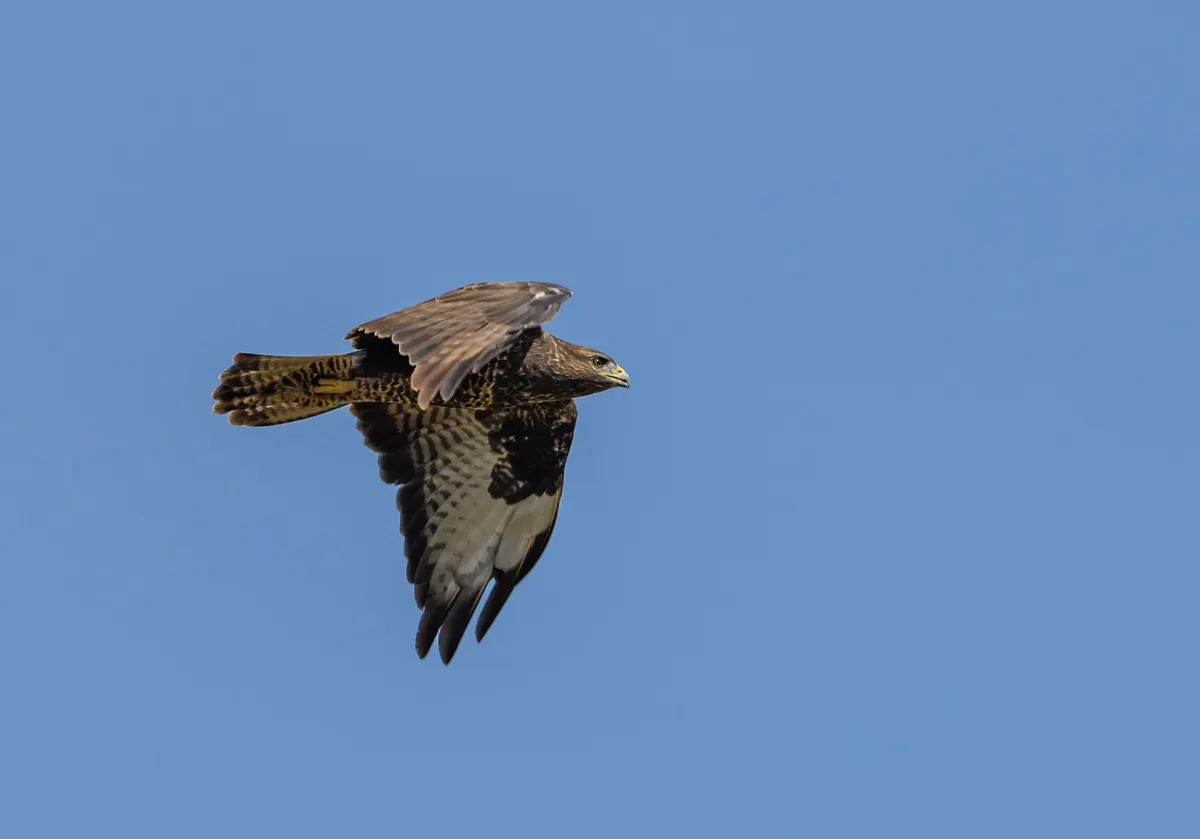
A sparrowhawk is all angles: small head, comparatively short wings, long tail, and a fast flap-flap-glide rhythm that seems to flick it between trunks. A goshawk is heavier through the chest and shoulders, with broader wings that bulge behind the leading edge and a slower, deeper, more deliberate wingbeat. Adults show a bold white eyebrow over a dark eye and fine grey barring across pale underparts; a sparrowhawk's barring is warmer, orange-brown in the female.
Their requirements differ too. Sparrowhawks are woodland edge birds at heart and will nest in a copse of a few hectares, a plantation, a park or a large garden with mature trees. Goshawks want space and quiet: big blocks of mature timber, often on a slope, with open ground nearby for hunting, and usually a good distance from regular human traffic.
Timing Your Visit
Late winter and early spring are the best weeks of the year. From roughly February into April, goshawks perform their display flights on still, bright mornings — slow flapping interspersed with swooping dives, and sometimes soaring high over the wood while calling. Sparrowhawks display too, with a deep, exaggerated flapping flight around the nesting area and occasional high circling. Both are at their most visible before the leaves close the canopy.
Once nesting begins, back off. The chicks hatch in late spring and the birds are deeply intolerant of people near the nest. Goshawks are listed on Schedule 1 of the Wildlife and Countryside Act, which makes disturbance at the nest an offence; if you are unsure whether an activity is acceptable, take advice from the relevant national agency before you go anywhere near it.
Summer brings family parties. From July, young birds are noisy, chase their parents and fly clumsily — the easiest sightings of the year, and the most rewarding. Autumn and winter strip the wood bare and give you the best sightlines, but the birds are quiet. Watch wood edges and hedgerows after a hard frost, when hunting activity picks up, and keep an eye on the sky over open fields where a goshawk may soar in the middle of the day.
Woodlands Worth Watching
Not every wood holds hawks, and the difference is usually structure rather than size. Look for mature trees with a varied age range beneath them, open rides, small clearings and soft edges where woodland meets rough grass or arable land. Sparrowhawks need songbird numbers; if the wood is birdless, it is hawkless.
Goshawk woods tend to be larger, quieter and often sit on a slope with mature conifers or mixed timber and open ground within a short glide. Find a vantage where a ride meets a clearing, or where a footpath opens onto a field edge, and get into the habit of watching from the same few spots. Local knowledge beats wandering. A hawk that routes through a particular gap on a particular wind will do it again next week.
Wear dull clothing, arrive before first light, and keep your back to a large trunk so your outline breaks up. Spend the first hour doing very little. Most woodland hawk sightings come from standing still, not from walking.
Signs in the Wood
Before you ever see the bird, the wood can tell you it is there. Learn to read the following, and always read them from a distance.
- Pluckings. Piles of feathers from a pigeon, woodpigeon or blackbird, often on a stump, log or fence post. Sparrowhawks tend to use regular plucking posts; goshawks often pluck on the ground or on a fallen branch.
- Feathers and pellets. Loose breast feathers caught on twigs, and small grey pellets beneath a favoured perch.
- Whitewash. Streaks of droppings on foliage and branches below a perch or near a nest tree.
- Sudden silence. A mixed flock of tits and finches going quiet, or alarm calls spreading through the wood, often means a hawk has just passed through.
- Large stick nests. A bulky platform of sticks, high in a mature tree, can be a goshawk nest. Note it, then walk on. Never approach during the breeding season.
Watching Without Disturbing
Good fieldcraft is the whole game. It also happens to be the ethical way to watch scarce, protected birds.
- Park well away from the wood and walk in quietly. Slamming doors and loud conversation carry farther than you think through timber.
- Choose a watch point on a ride or edge with a wide view of the canopy and a patch of sky above it. Goshawks often announce themselves overhead.
- Stand in shade, against a dark trunk, and stay still. Scan slowly, side to side, and then look up. Then do it all again.
- Wait for the wood to return to normal. When the tits start calling again, you are no longer the thing they are worried about.
- Pick your conditions: still, dry, bright mornings after a cold night are best. Wind and rain suppress activity sharply.
- Do not use playback or bait, and keep well clear of nest areas in spring and summer.
- Keep notes: date, time, wind, what you saw, where you stood. A season of notes turns a puzzling wood into a predictable one.
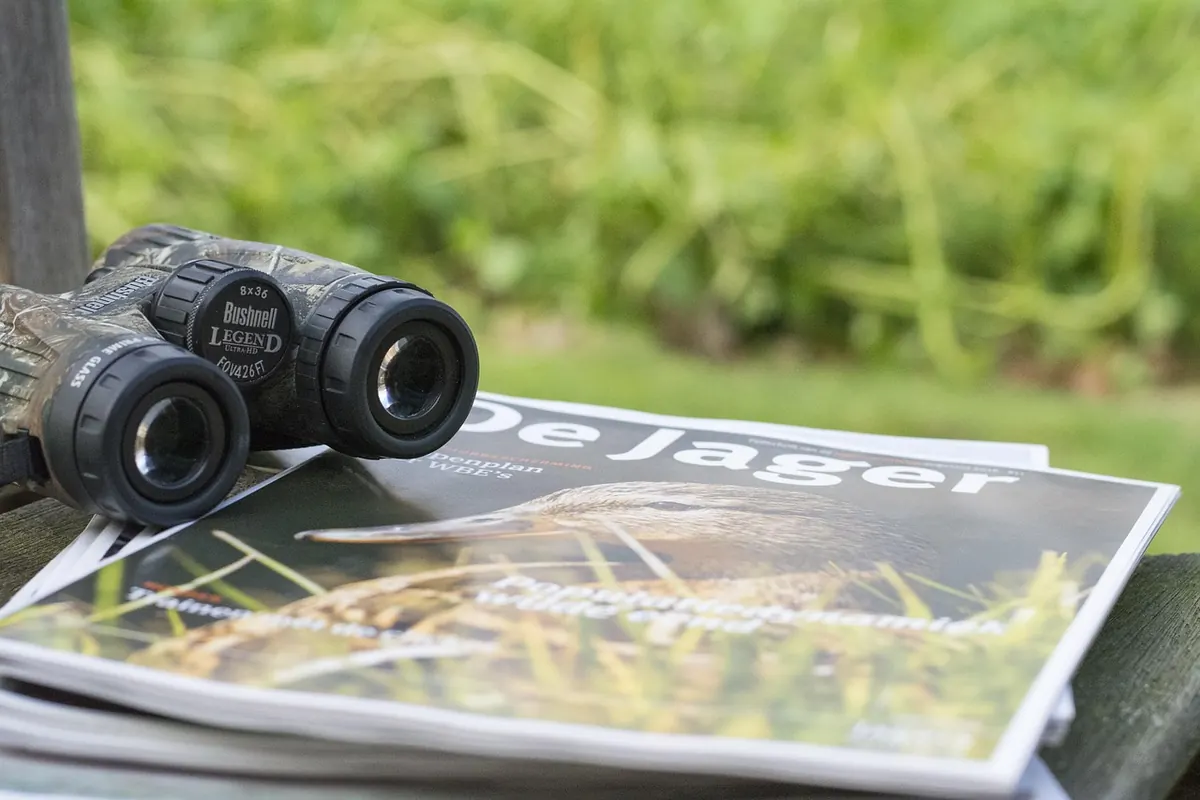
Binoculars of 8x or 10x magnification are ideal for woodland work; anything larger is hard to hold steady on a bird moving through branches.
A Simple Plan for Your First Three Visits
Go once in February or March, on a clear, calm morning, and give a known goshawk wood two or three hours from a fixed vantage. Expect nothing and watch the sky as much as the trees; display flights are often high and brief.
Go again in May or June, but only to walk the rides and learn the layout. Note the quiet corners, the mature trees, the places where the canopy opens. Do not go looking for nests.
Go a third time in September, early, and sit where the wood meets open ground. Watch for juvenile sparrowhawks chasing each other along the edge and for a goshawk hunting a field margin.
Three visits will not make you an expert. A dozen will start to. The birds are there — the work is in being in the right place, still and unnoticed, when they show.
Photo: Rajukhan Pathan / Pexels