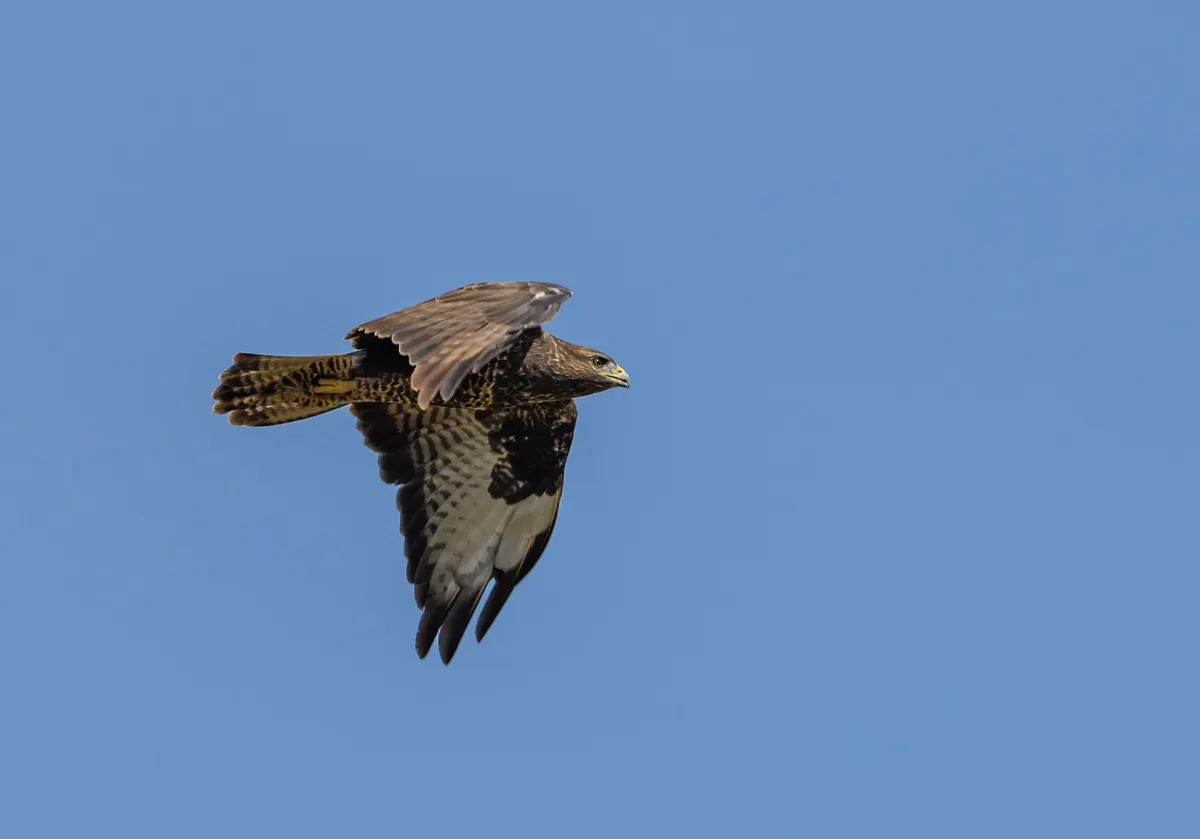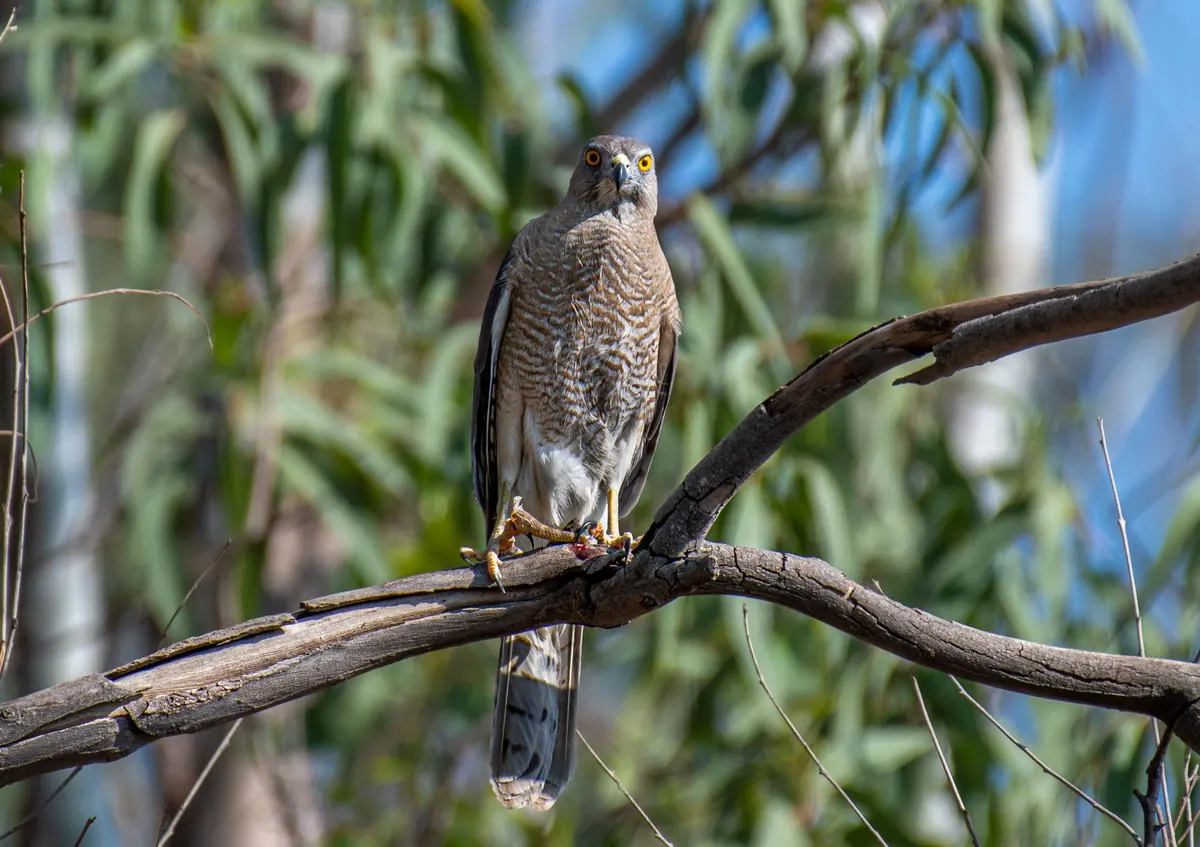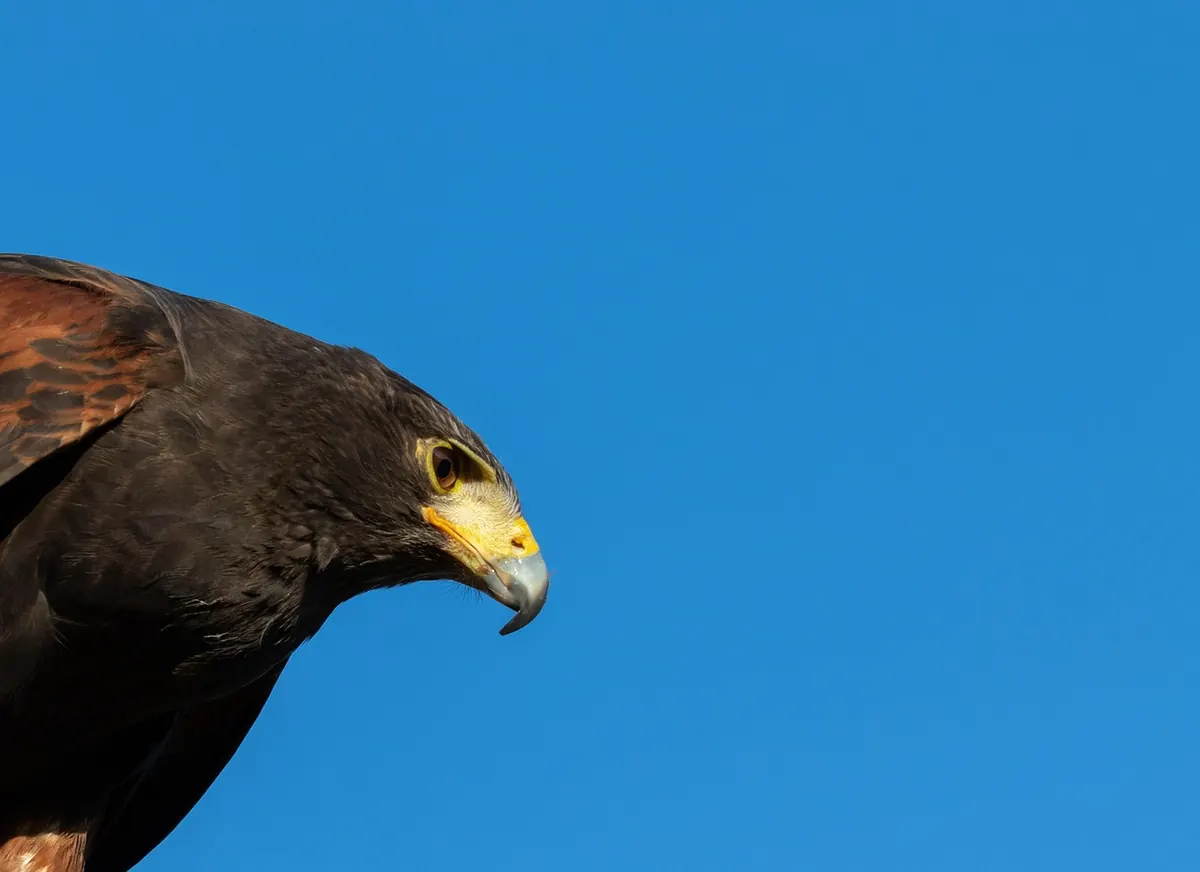
A sparrowhawk on the patio. A kestrel at the roadside. A tawny owl beneath a window, sitting far too still. Most people who find an injured bird of prey want to help and worry they will make things worse. In most cases help is genuinely needed, and it is possible — as long as you put your own safety first, keep the bird calm, and get it to someone experienced quickly. This is the order to do things in.
Stop and Look Before You Move
Stand back and watch for half a minute. You are looking for a wing held out at an odd angle or drooping, blood, a leg hanging loose, a head tilt, breathing through an open beak, or a bird lying flat with its eyes shut. A bird of prey that lets you walk right up to it is not tame. It is injured, stunned, or too weak to escape.
Make a note of exactly where you found it, and the time. Rehabilitators try to release birds as close as possible to the place they came from, and a bird released miles from its territory has a much harder job ahead of it. If the bird is on or beside a road, your first job is not the bird, it is the traffic. Make yourself visible, slow cars down, and only then think about a catch.
Safety First: Talons, Beaks and Stress
Raptors kill with their feet. Even a kestrel's talons will open up your hand, and a buzzard, red kite or owl can grip hard enough to do real damage. The beak tears. A frightened bird's instinct is to grab whatever comes near it, and that includes you.
- Wear thick leather gloves. Thin gardening gloves are not enough for anything larger than a little owl.
- Use a thick towel or blanket as a barrier between you and the bird.
- Never bring the bird close to your face, and never stroke it.
- Work with someone else if you can — one to help handle, one to open doors and make calls.
If you are not confident, do not force it. An hour's wait with a rescue on the way is far better than a broken wing or a bitten hand.
Catching and Containing, Step by Step
Prepare everything before you touch the bird, because once you have hold of it you cannot let go to hunt for a box.
- Get a box ready. A cardboard box with air holes punched in the lid and sides, lined with an old towel. It should be big enough for the bird to stand but not flap about. Never use a wire cage or a carrier with wide bars — birds of prey wreck their feathers and beaks on them.
- Have a second towel for covering the bird, and a hot water bottle filled with warm, not hot, water, wrapped in a towel, if the weather is cold.
- Approach quietly from behind or the side. Drop the towel over the bird so it covers the head and both wings, then gather it up with the wings folded against the body.
- Control the feet. With a larger bird, grip the legs just above the talons through the towel. Support the body underneath. Never hold a bird by one wing, the tail or a single leg, and never squeeze the chest.
- Put the bird into the box towel and all, close the lid, and keep the box somewhere dark, quiet and away from children, dogs and cats.
What Not to Do
- Do not feed the bird or offer water. A bird with a head or internal injury can choke, and fluid can end up in the airway.
- Do not apply antiseptic, creams, bandages or splints, and do not try to set a wing yourself.
- Do not keep it for a day or two "to see how it goes". Birds of prey lose condition fast without food and proper warmth.
- Do not release it to "see if it can fly". A bird that cannot fly will simply end up in worse trouble.
- Do not post the precise location of a rare bird online. Some raptors in the UK are still illegally trapped and shot, and a public grid reference helps nobody but the person who put the trap there. Share details privately with the rescue.
Who to Call
Ring ahead before you set off. Rescues often want a photo and will give you advice specific to the species. Your best first calls are a local wildlife rescue (search your county plus "wildlife rescue"), a veterinary practice that treats wildlife, or the RSPCA in England and Wales, the Scottish SPCA in Scotland, or the USPCA in Northern Ireland. Many wildlife hospitals take birds of prey; most vets will see them, though not all are experienced with raptors.
If the bird has a trap attached, appears to have been shot, or you suspect poisoning, call the police on the non-emergency number 101 as well. That may be a wildlife crime scene, and the evidence matters.
When you travel, put the box level in the footwell or secure it with a seatbelt so it cannot slide. Keep the car quiet — no radio, no heater blasting at the box — and cover it with a towel to keep it dark.
The Legal Position, Briefly
All wild birds in the UK, along with their nests and eggs, are protected by law. You must not take, injure or keep one. The law does recognise that people pick up disabled birds to get them care, and that you may hand the bird on to a vet or a rescue. What it does not allow is keeping the bird, breeding from it, or rearing it at home. Some species are specially protected and need a licence even for handling and rehabilitation — qualified rescuers hold those licences, you do not. If a legal question matters to your situation, take proper advice from your national wildlife agency: Natural England, NatureScot, Natural Resources Wales or DAERA in Northern Ireland.
Sometimes the Bird Is Fine
A feathered young tawny owl or kestrel on the ground in summer is often not abandoned at all. Young raptors leave the nest before they can fly properly and are fed by their parents on the ground for days. If the bird is alert, has no visible injury and the parents are likely nearby, leave it where it is and keep dogs and cats away instead. A bird that has hit a window and is sitting dazed may simply be stunned, and a quiet hour in a dark box can be all it needs — but still ring a rescue for advice.
A Five-Minute Checklist
- Watch from a distance and note the exact spot and time.
- Protect yourself: leather gloves, thick towel, nothing near your face.
- Box ready first — cardboard, air holes, towel lining.
- Cover the bird, fold the wings, control the feet, into the box.
- Dark, quiet, gently warm. No food, no water, no treatment.
- Phone a wildlife rescue or vet before you travel, and pass on the location.
Act quickly, but calmly. If you would rather not handle the bird at all, you have still done something useful by keeping it safe from traffic, dogs and cats and staying with it until help arrives. That counts, and it is often the difference between a bird that returns to the sky and one that does not.
Photo: garten-gg / Pixabay