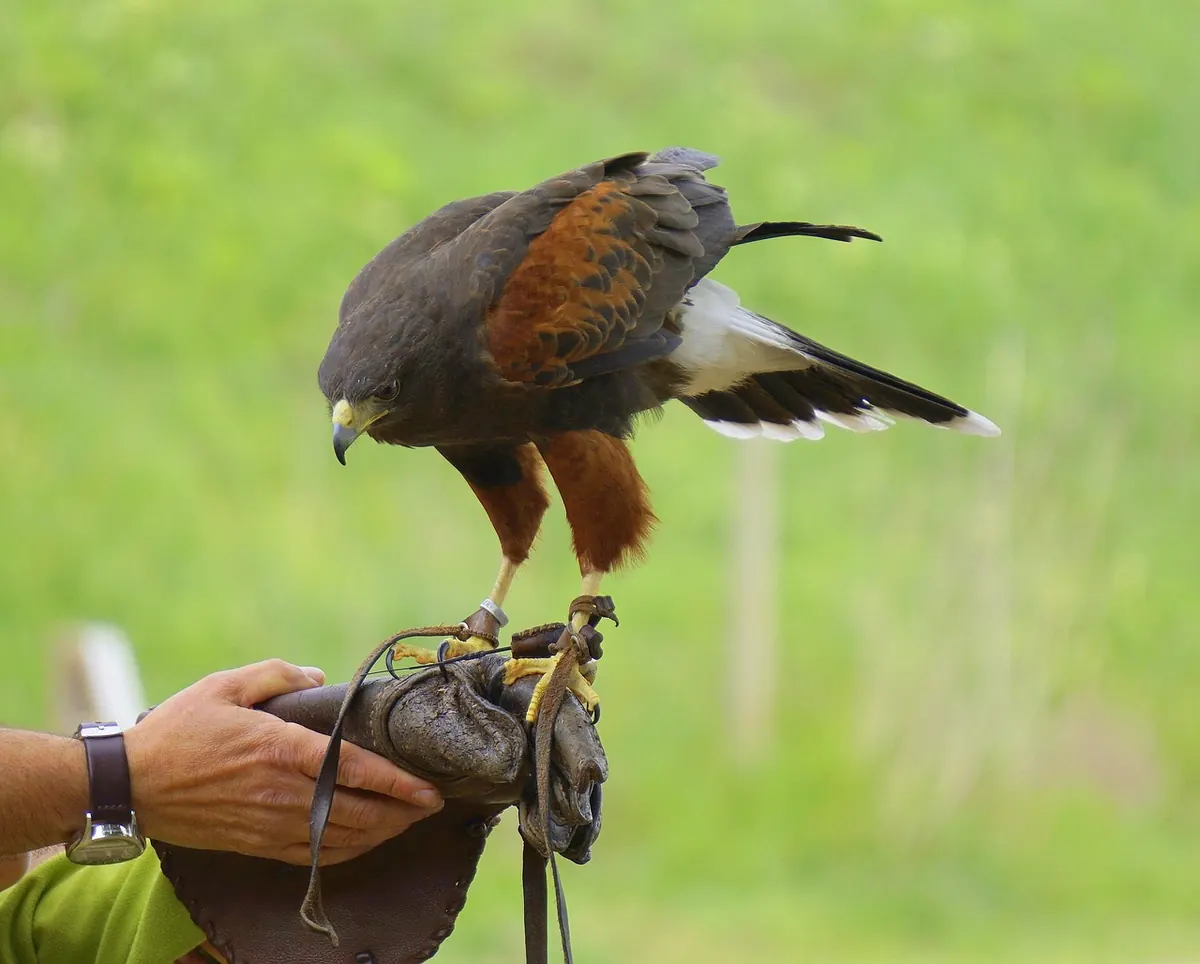
The first time a hawk lands on your fist, the kit stops being a shopping list and becomes something you can feel: the grip of the glove, the weight of the bird, the tension on the leash. Buy it before the bird arrives and those first weeks are spent learning each other. Buy it badly and you spend them re-tying knots and apologising to a bird that has already decided your tether is unreliable.
Before You Buy: Match the Kit to the Bird
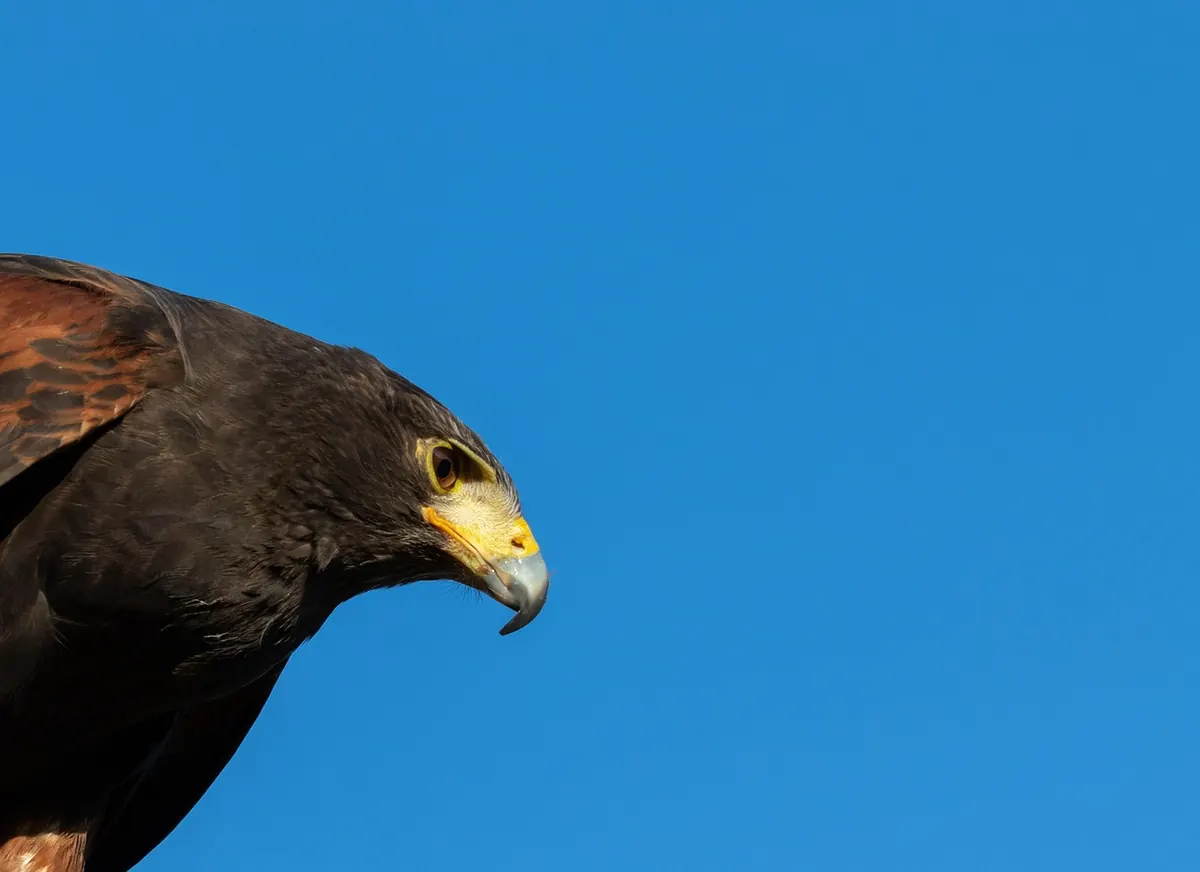
A male kestrel and a female Harris's hawk sit at opposite ends of the same equipment list. The kestrel needs very little: a light glove, small jesses, a swivel sized to its legs, and a perch it cannot tangle itself on. A Harris's hawk or a red-tailed hawk needs a stout gauntlet, jesses you can actually grip, and a swivel with some substance to it. A buzzard-sized bird will test every piece of leather you own.
So find out what you will be flying before you spend anything. Your club, your mentor, or the person you are buying the bird from can tell you what suits it. Buying one oversized gauntlet and one tiny swivel "to cover everything" is how beginners end up with a drawer of unusable kit and a missing swivel on the one morning it matters.
The Glove and Gauntlet: Fit, Leather and Which Hand
A right-handed falconer generally flies the bird on the left fist, keeping the right hand free for food, knots, gates and doors. Left-handed falconers often work the other way round. Get this wrong at the start and every routine fumble gets worse.
For small falcons and male sparrowhawks, a well-made leather glove with a cuff is plenty. For a Harris's hawk, goshawk or buzzard, you want a proper gauntlet that covers the forearm, because a big bird that bates downwards will find skin above a short cuff.
Look for supple, properly tanned leather, stitched rather than glued, with a cuff that stays put. Cheap gloves feel stiff, crack along the seams and turn slick the moment they get wet. A slick glove is how a bird ends up on a hard floor.
Breaking in a new glove
Wear it around the house for a few evenings. Bend it, grip things, work the cuff. A purpose-made leather conditioner helps, applied sparingly. Never fly with a glove that has a fold or ridge inside the cuff where a jess can catch.
Jesses, Swivels and the Leash
This three-part system is what keeps a trained bird attached to you, and it deserves more attention than anything else you buy.
Jesses
Two straps of leather, one around each leg, which you hold between your fingers on the fist. Traditional jesses are slit and threaded through; Aylmeri jesses use a permanent anklet with removable jesses, which makes replacement simple and is kinder to the bird's legs. Oil the leather, check it every time you pick the bird up, and replace it before it looks tired. A perished jess snaps, and a hawk loose in unfamiliar country is a very long afternoon.
Swivels
A swivel sits between the jesses and the leash and stops the bird winding itself into a knot. Buy a few, and buy quality. Hold one up and spin it: if it does not turn freely, or the metal has a rough edge that could graze a leg, send it back. A stiff swivel is worse than none at all, because it pushes twist straight into the leather.
Leashes and creances
You need a short leash for the fist and the perch, and a longer training line — a creance — for early flying to the fist in the open. Check the knot each session, and keep the leash clear of your feet. Most tethering accidents happen in the two seconds when somebody stops paying attention.
Scales: The Most Useful Thing You Own
Much of falconry is weight management: knowing what your bird weighed yesterday, this morning, and after last night's food. Buy digital scales with fine increments — a small bird's condition shifts in tens of grams. Weigh at the same time each day, before feeding, on the same stand, and write it down. Weigh at random times and the numbers tell you nothing.
Weight is also your earliest warning system. A bird that has dropped unexpectedly, or that sits differently, is telling you something. If you are worried, speak to an avian vet rather than adjusting the diet yourself. And if you are new to keeping birds, take advice on feeding and condition from someone experienced before you rely on guesswork.
Bath, Perch and Weathering Kit
The bath. A shallow tray with a non-slip base, deep enough for the bird to stand and splash but not to flounder. Some birds bathe daily and soak the floor; others barely use it. It is also where a hawk drinks, so it is not optional. Change the water daily.
The perch. Pick a design that suits your species and that the bird cannot wind its leash around. A perch that wobbles when the bird bates is the wrong perch. Check for splinters, sharp edges and anything the leash can snag on.
Weathering kit. Weathering means letting the bird sit outside in the open air, tethered, getting used to weather, noise and the world. You need a secure area, a perch, a bath, shelter from wind and strong sun, and a tether short enough that the bird cannot reach a fence, gate, hedge or pond. It must also be out of reach of cats, dogs and foxes.
A bell helps you find a bird in cover and most beginners add one early. A hood, telemetry and a proper carrying box are worth buying when you know what you need and have someone to show you how to use them.
The Beginner's Checklist
- Gauntlet or glove, sized to your bird and to the correct hand
- Two pairs of jesses, oiled and inspected
- Three or four quality swivels
- A short leash plus a longer creance
- Digital scales with fine increments and a notebook
- Shallow bath tray with a non-slip base
- A perch suited to the species, stable and snag-free
- A secure weathering area with shelter
- Bell, spare leather, sharp knife and a leather punch
- A freezer and a reliable supply of suitable food
Safety Habits Worth Building Early
Check leather, swivels and knots before every session, not after something goes wrong. Never leave a tethered bird unattended in an area you have not checked, and never fly a bird loose near roads, railways, power lines or livestock. Keep the bird at a sensible flying weight and under control; a hungry bird is not a reliable bird.
On the legal side, wild birds are protected in the UK and some species require documentation to keep. Rules differ by species and country, so check with the relevant authority or your club before you commit to a bird, and never take one from the wild.
Buy Less, Ask More
You do not need a full kit before your first bird arrives, and you certainly do not need the most expensive version of everything. Buy the essentials — glove, jesses, swivels, leash, scales, bath, perch and a safe place to weather the bird — and leave the rest until you understand why you want it. Then find someone who has kept birds for years and ask what they replaced first, and why. That conversation will teach you more about falconry equipment than any catalogue.
Photo: JosepMonter / Pixabay