Putting up a nest box for birds of prey feels like a straightforward act of conservation. Choose a tree, fix a box, wait for owls or kestrels to move in. In practice, many schemes produce empty boxes, failed clutches or repeated disturbance, not because the idea is wrong but because the details are. The failures are rarely mysterious. They usually come down to siting, dimensions, disturbance and predators—four issues that can be corrected with a little planning and restraint.
Match the Box to the Species, Not the Other Way Round
One of the most common mistakes is treating all raptors as if they need the same box. A barn owl, a kestrel and a tawny owl have different nesting habits, and a box that suits one may be ignored—or dangerous—for another. A kestrel box is often an open-fronted tray with a lip, while a tawny owl box is a large, dark chamber with an entrance hole. Barn owl boxes need a deep, draught-free chamber, a landing area and a design that keeps the nest away from the entrance.
Use a proven species-specific plan rather than improvising from scrap wood. If you are unsure, ask a local raptor group or an experienced conservation volunteer. Just as important, do not put up a box for a species that does not live nearby. A box in unsuitable habitat is simply a wooden ornament.
Siting: Habitat, Height and Aspect
Poor siting is probably the single biggest reason boxes stay empty. Birds choose nest sites based on food, shelter and safety, not because a box looks tidy. A barn owl box in an area of short, intensively managed grass with few voles will struggle, no matter how well built it is. Kestrels need open country with hunting perches and rough margins. Tawny owls need mature trees, woodland edge or parkland with nearby open areas for hunting.
- Put boxes near good foraging habitat. An isolated box in a poor landscape rarely succeeds.
- Mount high enough to feel safe. Most UK raptor boxes are placed several metres up, with a clear flight path to the entrance.
- Shelter from wind and rain. Choose an aspect that avoids prevailing wind and driving rain; east or north-east often works, but protection matters more than a rigid compass rule.
- Avoid busy areas. Keep boxes away from roads, floodlights, noisy footpaths and regular human activity.
- Watch the sun. A box that overheats can kill chicks, so provide shade and ventilation in warm, exposed positions.
Dimensions, Drainage and Interior Design
Even a well-sited box can fail if the dimensions are wrong. A chamber that is too small can crowd chicks; one that is too shallow lets predators reach in; one with no drainage becomes damp and mouldy. Use a proven design and build it properly.
- Entrance size: large enough for the target species, small enough to limit larger predators.
- Chamber depth: deep enough to keep the nest away from probing paws and beaks.
- Walls and roof: thick, insulated and sloped to shed water.
- Drainage and ventilation: holes in the floor, gaps near the top, and a roof overhang.
- Access panel: hinged or removable for maintenance, but secured so it cannot blow open.
- Materials: untreated timber, or timber treated with products safe for wildlife. Avoid creosote and old paint.
- Base layer: a shallow layer of clean, dry wood shavings can help. Avoid hay, which holds damp.
Predator Access: Think Like a Squirrel, Cat or Corvid
Predators are quick to find an easy meal. A box on a tree with branches close to the entrance, or a pole with no baffle, is an invitation. Corvids, squirrels, cats, rats, and in some areas pine martens can all take eggs or chicks.
- Fit a baffle. Use a smooth metal cone or collar on poles, and keep it clear of nearby fences, walls or bins.
- Remove jumping-off points. Cut back branches that give a predator access to the box.
- No external perch. A perch at the entrance helps predators as much as occupants.
- Use a tunnel or internal baffle. This stops paws and beaks reaching the nest chamber.
- Reinforce the entrance with a metal plate if gnawing is a problem.
- Avoid rodenticides nearby. Poisoned rodents are a serious risk to owls and other raptors.
Disturbance: The Silent Cause of Failure
Disturbance is often well-intentioned. A quick check becomes a weekly visit; a photographer wants one shot; a camera is installed for a livestream. For birds of prey, repeated disturbance at the nest can cause abandonment, chilling of eggs, or chicks failing to fledge.
Timing matters. Carry out installation and major maintenance outside the breeding season—usually late autumn to winter. Once a bird is prospecting or nesting, keep away. If monitoring is necessary, plan visits, keep them short, quiet and predictable, and never open a box containing eggs or young unless you are trained and hold any required licence. In the UK, all wild birds are protected, and some species receive extra protection at the nest; check with the relevant statutory conservation body before disturbing an active nest. When in doubt, stay back and record from a distance. Avoid drones, torches, flash photography and loud conversation near boxes.
Monitoring, Maintenance and Learning from Failure
An empty box is data, not a failure. Keep simple records: species seen, date, weather, signs of use, any predation or damage. This helps you adjust.
- Inspect boxes once a year, outside the breeding season.
- Clear out old nesting material, pellets and debris; repair leaks and loose fixings.
- Check baffles, brackets and straps.
- Replace damaged wood before it becomes a hazard.
- Record whether the box is occupied, and by what.
- If a box fails repeatedly, consider moving it, changing its aspect or type, or improving the habitat instead.
Habitat work often does more than hardware. Leaving rough grass margins, reducing rodenticide use, and retaining dead trees and mature hedgerows can make an area suitable for raptors. A box alone cannot replace food and cover.
A Realistic Approach to Nest Box Projects
Nest boxes are a useful tool, not a shortcut. They work best when they are part of a wider effort to provide habitat and reduce disturbance. Before you build, ask three questions: Is this species present? Is the habitat good enough? Can I leave the box alone? If the answer to any is no, fix that first. Then choose a proven design, site it carefully, protect it from predators, and keep your distance. A successful project is not measured by how many boxes you put up, but by how many birds fledge from them—and by whether you are willing to let the birds do the rest.
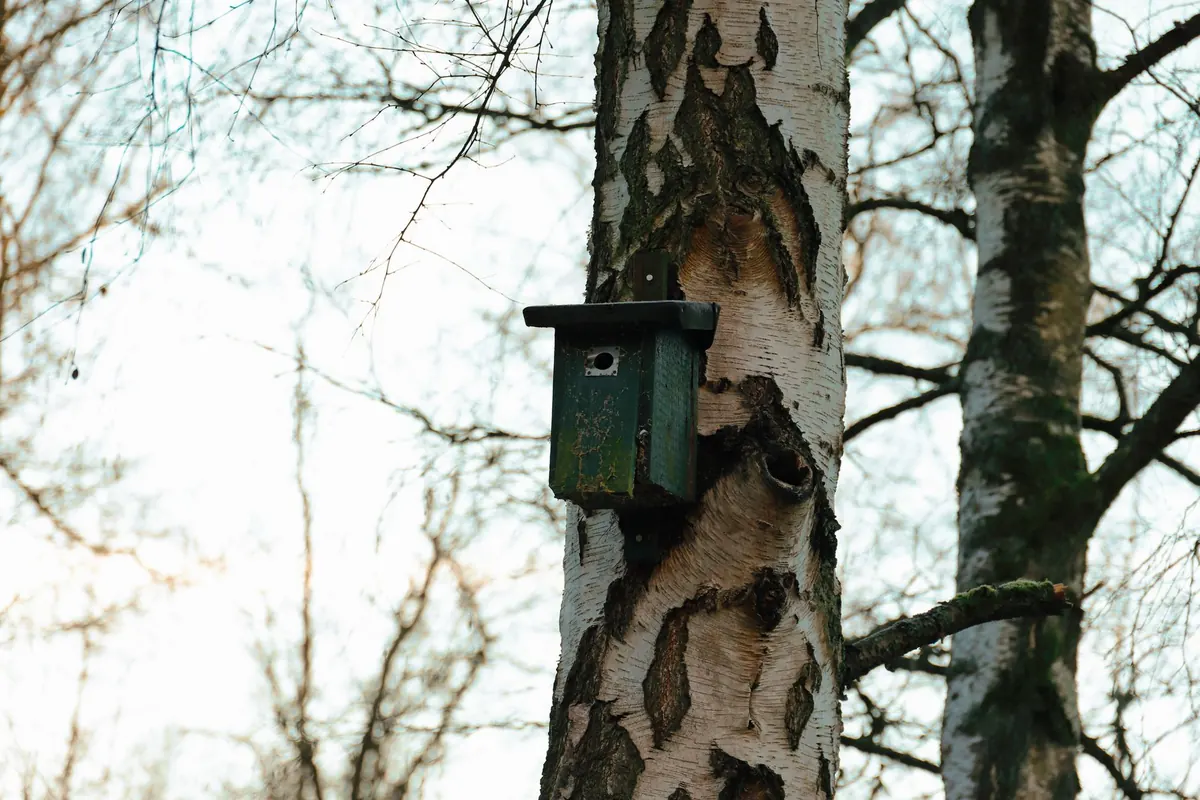
Photo: Christina & Peter / Pexels